Building Human-Centered AI for Healthcare Operations
Healthcare systems are under increasing operational pressure. Clinics are managing rising patient demand, administrative overload, staffing challenges, and growing expectations around efficiency, all while trying to maintain quality patient care.
As artificial intelligence (AI) becomes more integrated into healthcare workflows, many organizations are asking an important question:
How can AI improve operations without making healthcare feel less human?
At Kylin AI, we believe the answer starts with human-centered design.
Healthcare Doesn’t Need More Complexity
Many healthcare teams already operate in reactive environments. Front-desk staff spend hours managing reminders, follow-ups, cancellations, and scheduling conflicts. Providers deal with workflow disruptions caused by no-shows, late arrivals, and inconsistent patient engagement.
AI has the potential to reduce some of this operational burden, but only if it is designed thoughtfully.
Automation alone is not enough. Systems that prioritize efficiency without considering human workflows often create additional friction, reduce transparency, and increase distrust in the technology itself.
Healthcare operations require more than automation. They require operational trust.
What Human-Centered AI Actually Means
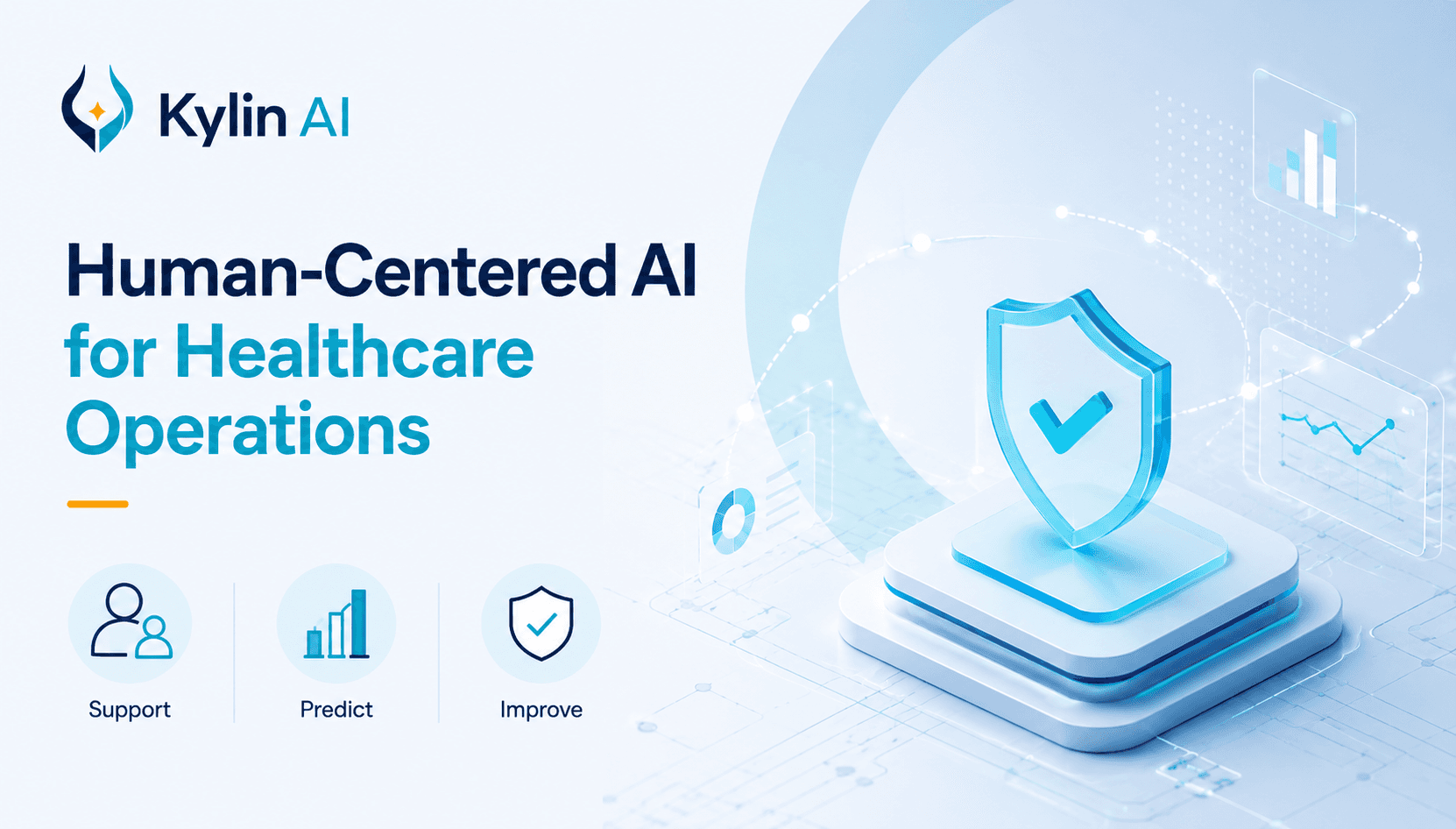
Human-centered AI is not about replacing healthcare professionals or removing people from decision-making. It’s about designing systems that support healthcare teams with better visibility, smarter workflows, and more informed operational decisions.
At Kylin AI, we believe AI should:
support staff, not replace them
reduce repetitive administrative work
improve operational visibility
preserve human oversight
integrate thoughtfully into existing workflows
The goal is not to remove the human element from healthcare. The goal is to help healthcare teams spend less time reacting to operational inefficiencies and more time focusing on patient care.
Why This Matters in Healthcare
Healthcare is fundamentally different from many other industries adopting AI.
Operational decisions in healthcare can affect:
patient access to care
continuity of treatment
staff workload and burnout
clinic efficiency and sustainability
patient trust
That’s why healthcare AI cannot operate as a “black box.”
Healthcare teams need to understand how recommendations are generated, how workflows are affected, and how decisions remain accountable and transparent.
Trust matters as much as efficiency.
Designing AI Around Real Healthcare Workflows
At Kylin AI, our approach focuses on predictive intelligence designed around real operational challenges in healthcare scheduling.
Rather than sending the same reminder to every patient, we explore behavioral and scheduling patterns that may help identify higher-risk appointments before disruptions happen.
Our approach combines:
predictive no-show intelligence
personalized outreach strategies
operational analytics
human-in-the-loop oversight
explainable AI principles
We also intentionally minimize unnecessary sensitive data collection and focus primarily on operational and scheduling patterns rather than clinical health information.
For us, human-centered AI also means responsible AI.
The Future of Healthcare AI Should Feel More Human, Not Less
As AI continues evolving, we believe the most effective healthcare systems will not be the ones that remove humans from the process entirely.
They will be the systems that help healthcare teams operate more proactively, more transparently, and with greater confidence.
The future of healthcare AI should support:
smarter operational coordination
reduced administrative burden
better patient engagement
more thoughtful decision-making
stronger collaboration between humans and intelligent systems
At Kylin AI, we believe technology should strengthen trust in healthcare operations, not weaken it.
And that starts with building AI systems designed around people first.